
Michal Vavrečka
Developmental Robotics ResearcherCTU in Prague, Jugoslávských partyzánů 1580/3, 160 00 Prague 6
michal.vavrecka@cvut.cz |+420 608 661 977
Web | GitHub | LinkedIn| Scholar | CV
Personal Profile
I am a cognitive scientist specializing in developmental robotics, artificial intelligence, and cognitive modeling. Since the beginning of my research in 2005, I have been dedicated to the principles of Artificial General Intelligence (AGI). During my psychology studies, I was already creating my own cognitive architectures. I continue this work by testing cognitive architectures in humanoid robots, which I train according to the principles of developmental robotics using reinforcement learning and intrinsic motivation, utilizing advanced robotic simulators that enable the automated creation of long task sequences (lifelong learning). In my research, I connect findings from psychology and neuroscience with technical applications in robotics.
Experience
Education
Founded Labs
Incognite Lab
We focus on the development of embodied cognitive architectures that are based on an epigenetic robotics principles. We adopt both industrial and humanoid robots to make them learn how to understand the outside world. We develop software for training humanoid robots, such as myGym and PRAG.
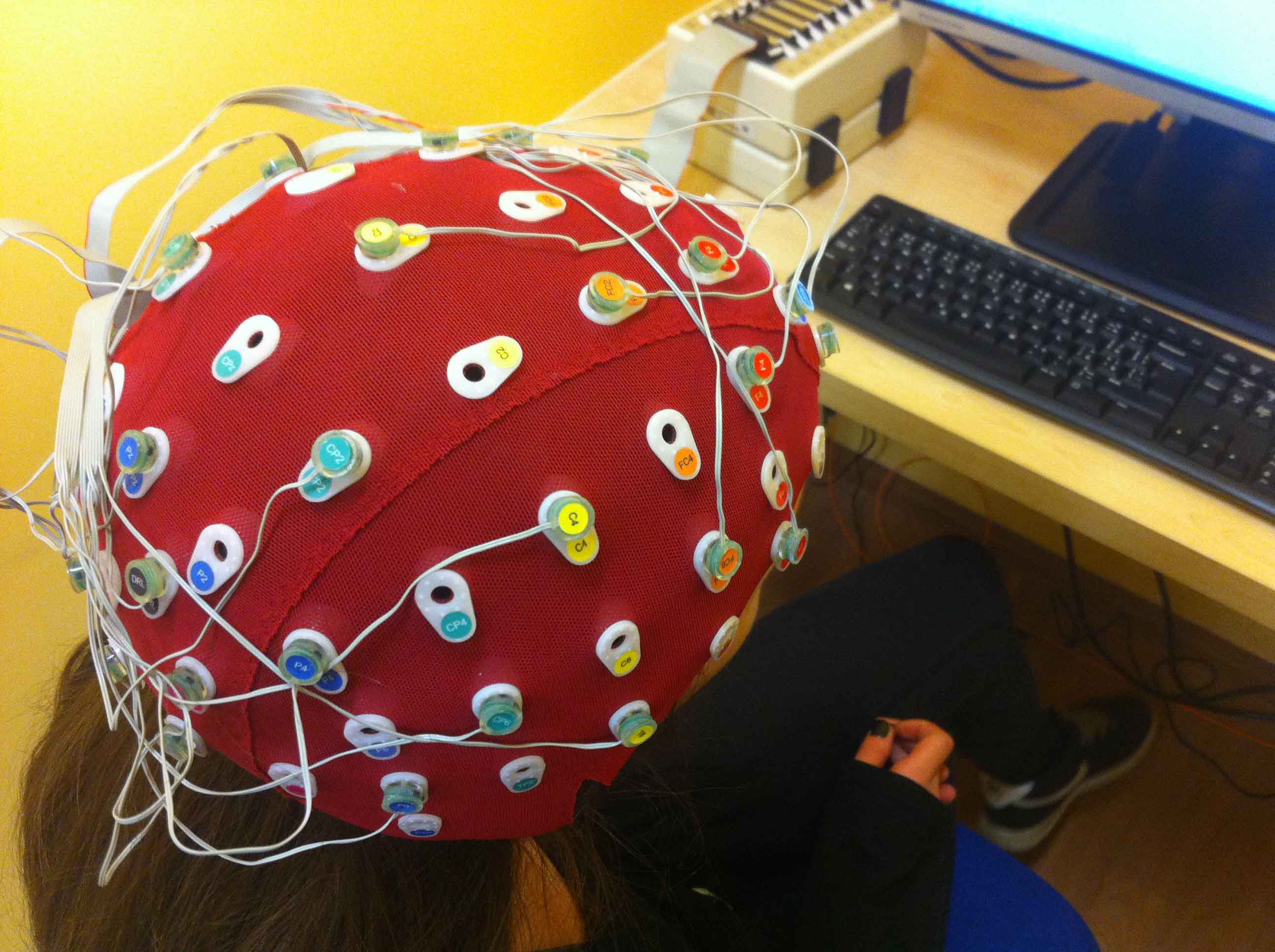
Neuropsychological Lab at USB
Open access laboratory equipped with 64-channel EEG and eye-tracker. The laboratory serves for administering experiments in cognitive and affective neuroscience.
EEG Lab at FEE CTU
Research laboratory dedicated to investigating spatial cognition with a particular emphasis on reference frames and neural representations of space. The lab is equipped for EEG-based experiments that study how the human brain processes, integrates, and switches between different spatial reference frames during perception, movement, and interaction with the environment.
Projects
iChores
This European project focuses on investigating the methods that enable a collaborative robot to extract task‑relevant information from the gaze and gestures of a human partner, and how gaze, gesture, and speech information can be combined for a more natural and intuitive interface.
TERAIS
TERAIS (Towards Excellent Robotics and Artificial Intelligence at a Slovak University) is an international project aimed at establishing the Department of Applied Informatics of Comenius University Bratislava. Funded by the Horizon Europe programme under the Twinning call, TERAIS brings together experts from the University of Hamburg in Germany and the Italian Institute of Technology in Genoa to collaborate with scientists at DAI
MIRRACLE
The goal of the project is to design a mapping algorithm that will enable us to create such a multimodal representation of actions that incorporates prior knowledge about the uncertainty of different domains, and show how this can be used to ease teaching robotic actions and generalize them to new embodiments (e.g. different robots, grippers, etc.) and environment.
HUMR
The project focuses on researching the social and technological aspects of the relationship between an elderly human user and the humanoid robot Pepper (human - robot interaction; HRI). The possibilities of using the robot to activate seniors in leisure centers for seniors are being explored.
Tradr
TRADR is an integrated european research project in the area of robot-assisted disaster response. Using a proven-in-practice user-centric design methodology, TRADR develops novel science and technology for human-robot teams to assist in urban search and rescue disaster response efforts, which stretch over multiple sorties in missions that may take several days or weeks.
Robotic Homunculus
Inspired by the biological somatosensory cortex, this project uses the iCub humanoid robot equipped with artificial skin. It investigates how the robot can autonomously learn a representation of its own body surface (a "robotic homunculus") through tactile stimulation and self-organizing maps.
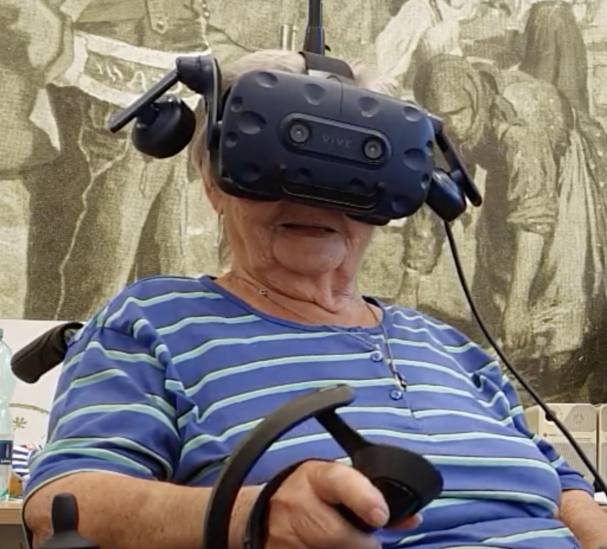
VIREAS
VIREAS software – Virtual Experience Kit – was developed based on a series of tests and studies among residents of a nursing home. The kit includes three virtual experiences: “Walk in the Forest”, “Walk in the City Center” and “Travel”. The interactive design combines computer graphics and 360° photography. The kit is designed to positively influence the self-expression and self-confidence of seniors, motivate them and stimulate their curiosity.
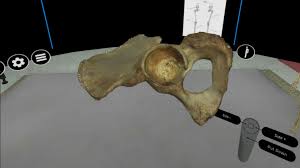
VR Bone Assembly 2.0
VR Bone Assembly 2.0 is an immersive educational software designed for medical students that uses virtual reality to teach human skeletal anatomy through interactive, hands-on learning. The application allows users to assemble and explore bones in a realistic 3D environment, improving spatial understanding and anatomical accuracy while reinforcing theoretical knowledge through practical engagement.
CloPeMa
CloPeMa aims to advance the state of the art in the autonomous perception and manipulation of all kinds of fabrics, textiles and garments. Various garments will be presented in a random pile on an arbitrary background and novel ways of manipulating them (sorting, folding, etc.) will be learned on demand in a real-life dynamic environment.
Ripley Robot
Extension of Ripley robot cognitive architecture from Nikos Mavridis (MIT). A cognitive robotics project utilizing a 7-DOF manipulator with rich sensory capabilities (vision, audio, touch). The research focuses on grounding natural language semantics in perception and action, enabling collaborative tasks through spoken dialogue and interactive learning.
Affective Neuroscience
Neuropsychological research focused on classifying human emotional states using EEG analysis. By presenting affective stimuli (such as IAPS images), the project aims to identify specific neural correlates and feature patterns associated with different emotional responses.
Neurofeedback Software
In this projekct we developed applications for EEG-based neurofeedback that strongly emphasize gamification to enhance user engagement and learning outcomes. By integrating game-like mechanics such as real-time feedback, goals, rewards, and adaptive challenges, the software transforms neural self-regulation tasks into interactive experiences while maintaining rigorous experimental and clinical relevance.
Spatial Cognition
An EEG-based study investigating how the human brain processes spatial information during navigation. The research differentiates between allocentric (world-centered) and egocentric (body-centered) reference frames using data from virtual environment tunnel tasks.
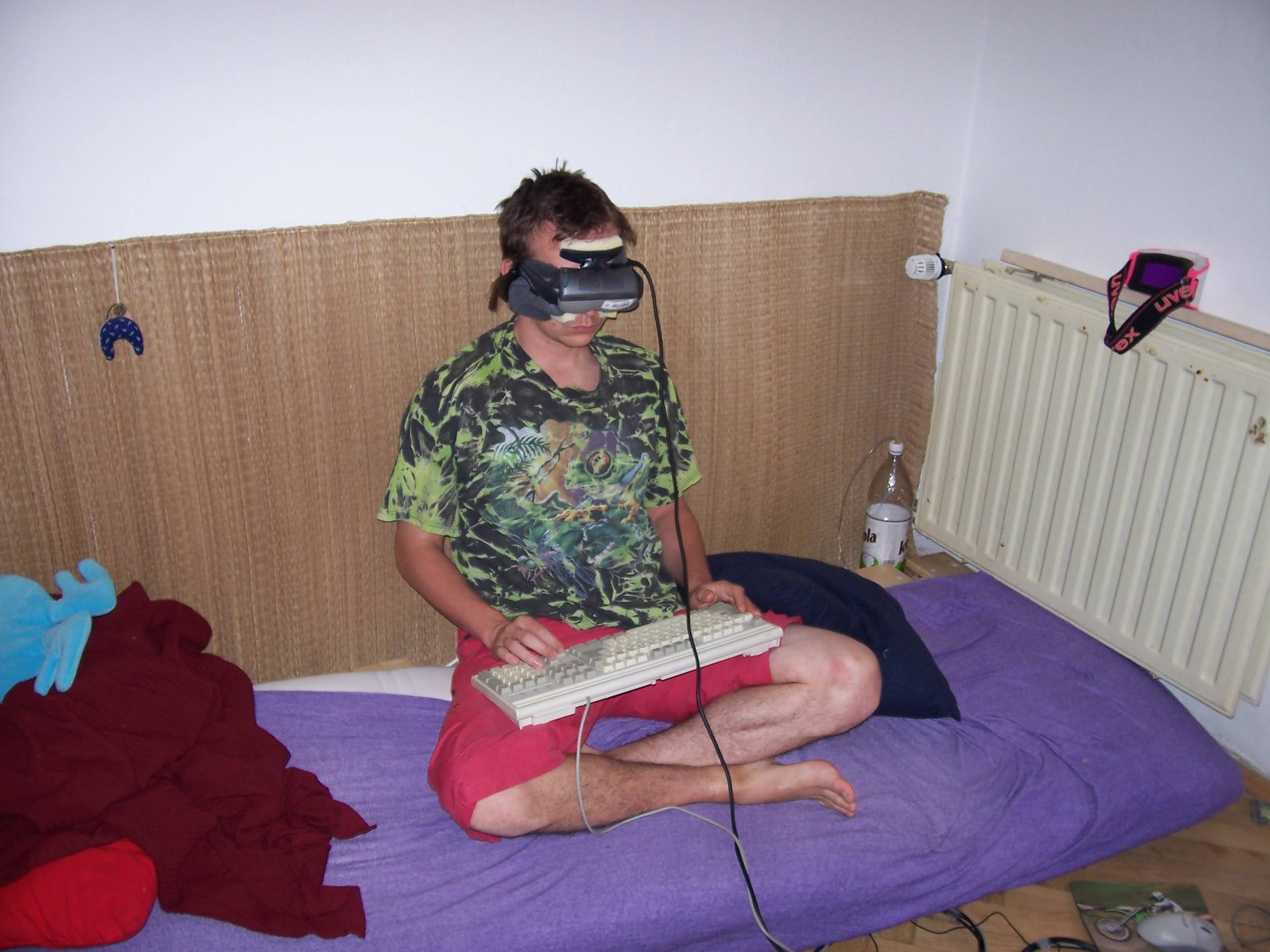
One week continuos stay in VR
The presented paper contains results of pilot study in the area of human computer interaction. The proposed design is based on a subject's stay of several days in purely symbolic (text) visual environment and subsequent analysis of one´s change in production and perception of visual mental images.
Symbol Grounding
This fundamental research addresses the symbol grounding problem: how abstract symbols (like words) gain meaning through connection to physical world experiences. The project develops computational models that link linguistic inputs with sensorimotor data from robotic agents.
Software
PRAG
Our generator takes as input user-defined sets of atomic actions, objects, and spatial predicates and outputs solvable tasks of a given length for the selected robotic environment. The generator produces solvable tasks by constraining all possible (nonsolvable) combinations by symbolic and physical validation.
myGym
myGym enables fast prototyping of RL in the area of robotic manipulation and navigation.You can train different robots, in several environments on various tasks. There is automatic evaluation and benchmark tool. From version 2.1 there is support for multi-step tasks, multi-reward training and multi-network architectures.
iChores
We have developed and demonstrated a system that en- ables the TIAGo++ robot to understand and execute complex, sequential commands that combine natural language and multiple pointing gestures. Our approach of decomposing commands and using a probabilistic framework for reasoning has proven to be highly effective in the planning stage.
NicoIK
Inverse kinematics and automatic grasping for the Nico humanoid robot.
Pepper Controler
Controlling the Pepper humanoid robot using Python.
Bioloid Toolbox
A specialized software control library (Matlab/Python) designed for the Robotis Bioloid robot kits.
Courses
Cognitive Systems
Focuses on systems that can perceive, reason, learn, and interact with the environment, often drawing inspiration from biological cognitive systems.

Cognitive Science
An introduction to the interdisciplinary study of mind and intelligence, embracing philosophy, psychology, artificial intelligence, neuroscience, linguistics, and anthropology.

Metacognition
Exploration of "thinking about thinking", including knowledge about when and how to use particular strategies for learning or problem-solving.
Neuropsychology
Study of the structure and function of the brain as they relate to specific psychological processes and behaviors.
Neuroinformatics
Application of computational models and analytical tools to neuroscience data, bridging the gap between neuroscience and information science.

Psychometrics
The field of study concerned with the theory and technique of psychological measurement, including the measurement of knowledge, abilities, attitudes, and personality traits.
List of Publications
-
2025Farkaš, I., Vavrečka, M., & Wermter, S. Will multimodal large language models ever achieve deep understanding of the world? Frontiers in Systems Neuroscience, 19, 1683133.
-
2018Štěpánová, K., Klein, F. B., Cangelosi, A., & Vavrečka, M. Mapping language to vision in a real-world robotic scenario. IEEE Transactions on Cognitive and Developmental Systems, 10(3), 784-794.
-
2017Hoffmann, M., Straka, Z., Farkas, I., Vavrečka, M. & Metta, G. Robotic homunculus: Learning of artificial skin representation in a humanoid robot motivated by primary somatosensory cortex. IEEE Transactions on Cognitive and Developmental Systems.
-
2017
-
2016Štěpánová K., Vavrečka M. Estimating number of components in Gaussian mixture model using combination of greedy and merging algorithm. Pattern Analysis and Applications.
-
2016Fiedler, J., Mrhálek, T., Vavrečka, M., et al. Kognice a hemodynamika po karotické endarterektomii pro asymptomatickou stenózu. Česká a slovenská neurologie a neurochirurgie, 79/112(2), 201–206.
-
2015Fiedler, J., ... Vavrečka, M., et al. Cognitive Outcome and Hemodynamic Changes 3 months after Carotid Endarterectomy. Journal of Neurosurgery, 123(2).
-
2014Vavrecka, M., & Farkaš, I. A multimodal connectionist architecture for unsupervised grounding of spatial language. Cognitive Computation, 6(1), 101-112.
-
2012Vavrecka, M., Gerla, V., Lhotská, L., & Brunovský, M. Frames of reference and their neural correlates within navigation in a 3D environment. Visual Neuroscience, 29(03), 183-191.
-
2012Vavrecka, M., & Lhotská, L. Odlišnosti užívání referenčních rámců během orientace v 3D prostoru. Linguistica ONLINE, 14, 95-100.
-
2012Vavrecka, M., & Lhotská, L. The alteration of reference frames in a vertical navigation. Cognitive Processing, Springer Berlin.
-
2012Vavrecka, M., Rosset, B., & Lhotská, L. The inter-individual differences and the test–retest reliability of a EEG signal. Clinical Neurophysiology, 123(3).
-
2011Vavrecka, M., & Lhotská, L. Event related spectral perturbations within 3D navigation task. Activitas Nervosa Superior Rediviva, 53.
-
2009Vavrecka, M. The neural correlates of spatial reference frames processing. Cognitive Processing, 10:2, 342-345.
-
2025Zamrazilova, K., Vavrecka, M., et al. “Are Multimodal Signals Synchronous?”: Temporal Relation of Declarative Gestures and Language Instructions in Human Robot Interaction. 2025 IEEE International Conference on Development and Learning (ICDL), 1-6.
-
2025Škoviera, R., Vavrečka, M., et al. PRAG: Procedural Action Sequence Symbolic Generator as a Mechanism for Autonomous Learning. 2025 IEEE International Conference on Development and Learning (ICDL), 1-8.
-
2025Gavura, J., Vavrecka, M., Farkaš, I., & Gäde, C. Robotic Calibration Based on Haptic Feedback Improves Sim-to-Real Transfer. International Conference on Artificial Neural Networks (ICANN), 136-148.
-
2025Lúčny, A., ... & Vavrecka, M. Examining the legibility of humanoid robot arm movements in a pointing task. arXiv preprint arXiv:2508.05104.
-
2025Vavrecka, M., Skoviera, R., Sejnova, G., & Stepanova, K. PRAG: Procedural Action Generator. arXiv preprint arXiv:2507.09167.
-
2024Sejnova, G., Vavrecka, M., & Stepanova, K. Bridging language, vision and action: Multimodal VAEs in robotic manipulation tasks. 2024 IEEE/RSJ International Conference on Intelligent Robots and Systems (IROS).
-
2024Vavrecka, M., Kriz, J., Sokovnin, N., & Sejnova, G. Modular Reinforcement Learning In Long-Horizon Manipulation Tasks. International Conference on Artificial Neural Networks (ICANN), 299-312.
-
2024Ostapenko, A., & Vavrecka, M. Action Recognition System Integrating Motion and Object Detection. International Conference on Artificial Neural Networks (ICANN), 259-269.
-
2024Sejnova, G., Vavrecka, M., & Stepanova, K. Adaptive compression of the latent space in variational autoencoders. International Conference on Artificial Neural Networks (ICANN), 89-101.
-
2023Sienkiewicz, B., Sejnova, G., Gajewski, P., Vavrecka, M., & Indurkhya, B. Native Czech speakers consider English-speaking robots more intelligent. Proceedings of the 11th International Conference on Human-Agent Interaction (HAI), 362-364.
-
2023Sienkiewicz, B., ... Vavrecka, M., & Indurkhya, B. How language of interaction affects the user perception of a robot. International Conference on Social Robotics (ICSR), 308-321.
-
2022Vavrecka, M., Sejnova, G., & Schimperk, P. Personified Robotic Chatbot Based On Compositional Dialogues. International Conference on Interactive Media, Smart Systems and Emerging Technologies (IMET), 1-2.
-
2021Vavrecka, M., Sokovnin, N., Mejdrechova, M., & Sejnova, G. myGym: Modular toolkit for visuo-motor robotic tasks. 2021 IEEE 33rd International Conference on Tools with Artificial Intelligence (ICTAI), 279-283.
-
2021Sejnova, G., Mejdrechova, M., ... & Vavrecka, M. Reward Redistribution for Reinforcement Learning of Dynamic Nonprehensile Manipulation. 2021 7th International Conference on Control, Automation and Robotics (ICCAR), 326-331.
-
2020Niyogi, R., Sharma, S., Vavrecka, M., & Milani, A. A Learning Based Approach for Planning with Safe Actions. Computational Science and Its Applications – ICCSA 2020, 93-105.
-
2019Sejnova, G., Vavrecka, M., Tesar, M., & Skoviera, R. Exploring logical consistency and viewport sensitivity in compositional VQA models. 2019 IEEE/RSJ International Conference on Intelligent Robots and Systems (IROS), 2108-2113.
-
2018Sejnova, G., Tesar, M., & Vavrecka, M. Compositional models for VQA: Can neural module networks really count? Procedia computer science, 145, 481-487.
-
2016Plassová, M., Tesař, M., Vavrečka, M., & Valuchová, K. Approximate number system in children. Proceedings of the 6th Biannual CER Comparative European Research Conference, 182-187.
-
2013Vavrečka, M., Kužílek, J., & Lhotská, L. Vliv kontextu na orientaci v prostoru. Kognícia a umely život XIII, 279-285.
-
2013Vavrečka, M., & Lhotská, L. EEG Feature Selection Based on Time Series Classification. Lecture Notes in Computer Science (LNCS), vol. 7988, 520-527.
-
2012Vavrečka, M., & Farkaš, I. Unsupervised Visual and Lexical Binding. Proceedings of International Conference on Cognitive Systems.
-
2011Vavrečka, M., Farkaš, I., & Lhotská, L. Bio-inspired Model of Spatial Cognition. Lecture Notes in Computer Science 7062 (LNCS), 443-450.
-
2011Vavrečka, M., & Lhotská, L. EEG analysis of the navigation strategies in a 3D tunnel task. Lecture Notes in Computer Science 7062 (LNCS), 388-395.
-
2011Vavrečka, M. Visually driven homonyms disambiguation. Kognice a umělý život XI, 293-299.
-
2011Vavrečka, M., & Farkaš, I. Unsupervised Grounding of Spatial Relations. Proceedings of the Third European Conference on Cognitive Science, Bulgaria.
-
2010Vavrečka, M., & Farkaš, I. Unsupervised model for grounding multimodal representations. Third EuCogII Members Conference, Mallorca.
-
2010Vavrečka, M., Kužílek J., & Lhotská, L. Classification of the EEG feature components. 10th International Conference on Information Technology and Applications in Biomedicine.
-
2010Vavrečka, M. Representation of objects in space based on two visual pathways. Kognice a umělý život X, 403-409.
-
2009Macaš, M., Vavrečka, M., Gerla V., & Lhotská, L. Classification of the emotional states based on the EEG signal processing. 9th International Conference on Information Technology and Applications in Biomedicine.
-
2009Vavrečka, M. The EEG Correlates of the Allocentric and the Egocentric Spatial Reference Frames Processing. World Congress on Medical Physics and Biomedical Engineering, 2295-2299.
-
2009Vavrečka, M. The EEG activity within the spatial navigation. Kognice a umělý život IX, 341-350.
-
2008Vavrečka, M. Spatial frames of reference processing and its EEG correlates. 55. společný sjezd české a slovenské společnosti klinické neurofyziologie.
-
2008Vavrečka, M. Multimodal representations for symbol grounding. Kognice a umělý život VIII.
-
2007Vavrečka, M. Grounding of spatial terms. Kognice a umělý život VII, 365-377.
-
2006Vavrečka, M. Symbol grounding in context of zero semantic commitment. Kognice a umělý život VI, 401-411.
-
2006